Location/Region: Florida, North Carolina, California, Illinois
Industry: Transportation & Logistics – Equipment Manufacturing
Apps implemented: Sales, Accounting, Project, Purchase, Inventory, Manufacturing, Email Marketing and Social Marketing.
Number of users: 15
Software replaced: Prism
Hosting type: Odoo.sh
Energy Guard Aerodynamic Solutions is redefining efficiency in the transportation industry. By combining cutting-edge aerodynamic engineering with Odoo, the company has streamlined its operations, cut manual workloads drastically, and positioned itself for significant growth. Energy Guard gained live data insights, operational visibility, and the ability to scale while keeping a lean team, an essential advantage in a fast-evolving logistics landscape.
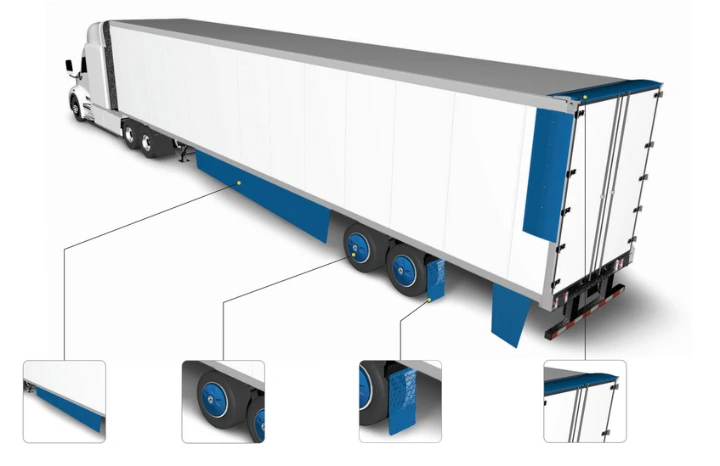
Founded out of innovation and engineering excellence, Energy Guard was born in 2015 within Michelin’s innovation lab. The company’s purpose has always been to improve fleet fuel efficiency and reduce greenhouse gas emissions by optimizing airflow control. The team saw an opportunity to redesign traditional aerodynamic solutions, beginning with the flush-to-rear trailer fairings that shape airflow to reduce drag. What started as an internal concept at Michelin evolved into an independent venture now owned by Crown Industries, operating with the agility and mindset of a startup while backed by strong investment.
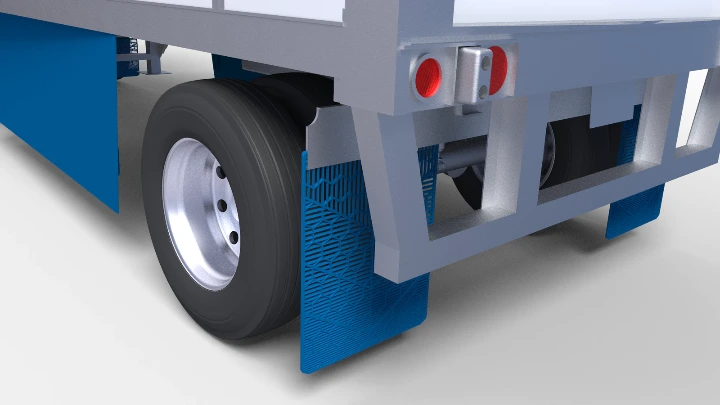
Today, Energy Guard operates virtually, with team members based in Florida, South Carolina, Chicago, and California. Their products, such as trailer skirts and fairings, stand out for having no moving parts, proven performance, and a lifetime warranty, the only one in the category.
"We want to be very honest and upfront with our customers. We want to show them apples-to-apples comparisons. That’s what sets us apart.”
.webp?access_token=cc577366-4c5d-4565-a104-60ac7e0a6777)
Some Roadblocks Before Odoo
Before adopting Odoo, Energy Guard’s systems were a mix of outdated software and manual workarounds. Coming out of Michelin, the team initially used Prism, a legacy software described by Jesse as “an old-school ones-and-zeros type software.” It wasn’t user-friendly and, more importantly, couldn’t connect different sections of the organization. When the company spun off and became independent, it turned to spreadsheets to manage orders, inventory, and invoicing.

This Excel-based environment came with predictable pitfalls: data deletion, missing backups, and constant risk of human error. Every process, from order intake to warehouse pick tickets and invoicing, depended on manual tracking. “It was a custom spreadsheet environment,” Jesse says. “That comes with all the dangers you can imagine, somebody deleting data or losing backups.”
As the company grew, the inefficiencies became unsustainable. The manual systems made real-time reporting impossible and limited Energy Guard’s ability to scale efficiently.
"Based on revenue growth and everything else, we really had to move into a legitimate ERP.”
Finding a System That Works
Energy Guard’s introduction to Odoo was as unconventional as it was serendipitous: a purple billboard in Chicago. “It said something along the lines of ‘an ERP that doesn’t suck,’” Jesse recalls with a laugh. That bold message caught his attention and sparked the company’s decision to explore further.
The implementation began in March 2025, with Energy Guard importing its data from January through March to consolidate the year’s operations. The transition wasn’t without its challenges, but with Odoo’s support team the company quickly gained control. Within a few weeks, the new system was live and operational.
From the start, Energy Guard adopted a wide range of Odoo applications: Contacts, Sales, Accounting, Project, Purchase, Inventory, and Manufacturing, as well as Email Marketing and Social Marketing. The team plans to expand soon into CRM as they scale marketing efforts in 2026.
Live data and faster reporting: Before Odoo, invoicing was a weekly or even biweekly catch-up process. Now, it happens in real time. “If you look at invoicing, we used to do it every week or week and a half, catching up,” Jesse says. “Now it’s live. Our AR is up to date, and the reporting piece has been huge.” This access to real-time data has given leadership the ability to make informed decisions quickly, a crucial advantage for a fast-growing company.
- The efficiency gains were so significant that Energy Guard was able to create two new roles that hadn’t previously existed, allowing the team to focus on growth instead of data entry.

What’s Next for
Energy Guard
As Energy Guard continues to grow under Crown Industries, the company is preparing for a major relaunch in 2026, backed by new contracts and an operational infrastructure ready to scale. “We’ve landed some massive deals,” Jesse says. “We already knew the quality of the product was superior. We just had to prove our operations could keep up.”
Odoo will play a key role in this next phase. The company plans to lean heavily on marketing automation and CRM, tracking calls and expanding digital engagement. “That’s going to be critical moving into next year,” Jesse explains. Energy Guard also plans to integrate shipping partners directly into Odoo, automating up to three hours of manual work per day and further streamlining logistics.
With the combination of strong engineering, sustainable innovation, and now a robust ERP backbone, Energy Guard is poised for accelerated growth in both operations and brand presence. If your organization is ready to eliminate silos, gain real-time visibility, and unlock growth potential, discover what Odoo can do for you.